



From Paper Files to AI & Blockchain: Transforming Uganda’s Registration System
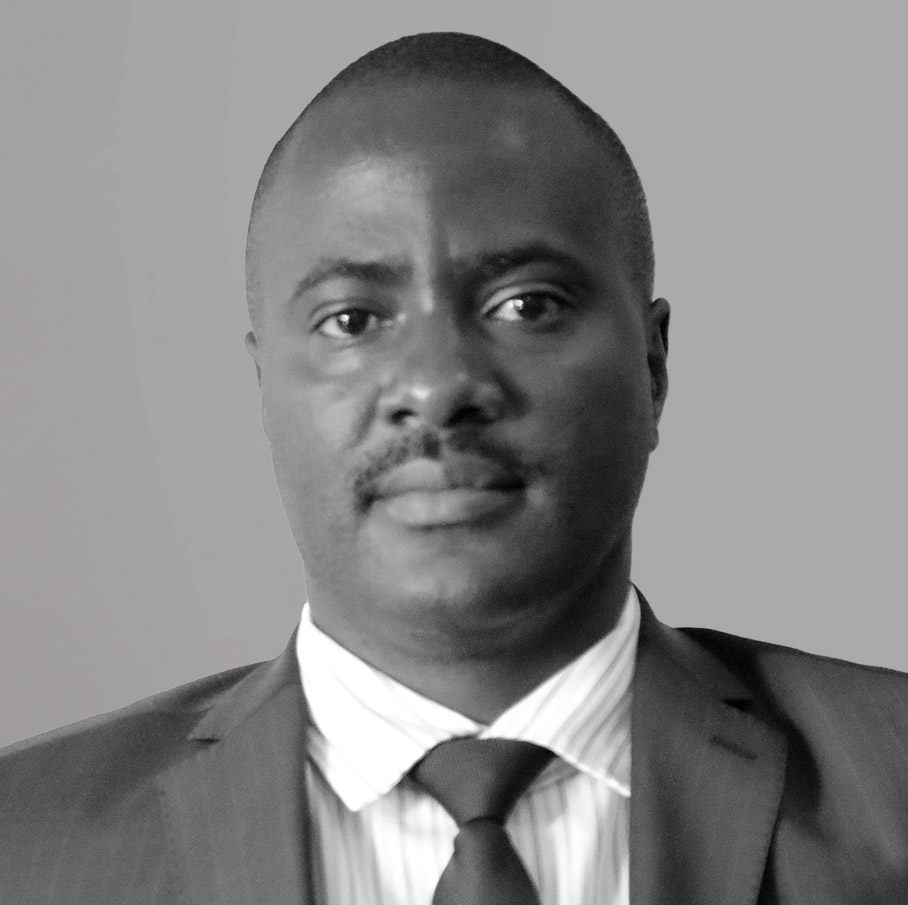
Uganda’s Registration Services Bureau (URSB) has moved its services online to make it faster and easier for citizens to use its services, which include registering marriages and setting up a business. Governance Matters asked URSB’s Commissioner for Information and Communications Technology (ICT) and Innovation Arthur Kwesiga how public organisations can make digital transformation succeed.
Governance Matters: The URSB launched a full-scale digital transformation effort in 2022–2023 by moving many of its public services online. It scanned and digitised paper records, launched the Online Business Registration System, and introduced online and mobile payment options linked to other government databases. What were the problems with the old, manual, paper-based registration system that made these reforms necessary?
Arthur Kwesiga: The URSB provides business registration and other services. These include companies, partnerships, documents, intellectual property registrations, security interests in moveable property registry, as well as receivership and insolvency. We have recently also been mandated to register all non-individual entities – legal persons such as schools, trusts, and government agencies. We collect revenue from all these services.
Before our digital transformation, registration was highly inconvenient. Everything was manual and paper-based. Documents could get misplaced or be damaged. Our services were so complex and excessive that people often needed intermediaries to help them with registration. There was also limited access to our services. People from all over the country had to come to register at our head office in Kampala, even travelling overnight to do so. Our systems were fragmented: we had one procedure to check names, and a separate one to get a payment advice form from a bank outside. A company had to register for a tax identification number and then work with the same documents for the tax authority.
With all this inconvenience came a high level of corruption. To get service you had to know someone in the system, which also meant paying some money. Middlemen waited around our offices to get paid to help people fill in the complicated documentation. There were also questionable practices, like adding paperwork to justify extra fees, which further prolonged the whole registration process.
All this made it difficult to do business in Uganda, especially for foreigners, and hindered foreign direct investment. Uganda was ranked near the bottom of the World Bank’s Doing Business index.1 There was global competitive pressure to do better.

URSB’s digital transformation effort required it to work with other government agencies, train staff who were used to paper-based work, and completely redesign its ICT systems. What were the main factors it had to consider in making that transition work?
Designing an online system is not an end in itself. Digital transformation starts by being customer-centric. We tried to understand the customer pain points by walking in their shoes: mapping each step of how they use our services. Then we asked how we could make the whole process easier for customers. We also mapped out our stakeholders, including our internal staff, as well as our partner agencies such as the Uganda Revenue Authority.
Once we had an idea of how to better support our customers through digitalisation, we implemented a change management strategy to communicate the new direction we were committing to. We had to instil institutional discipline: for instance, enforcing zero tolerance for corruption and strict adherence to the rules, even in our manual processes.
An early roadblock was that many of our legacy staff did not have ICT skills: they had worked with pen and paper processes for 20 years. We recruited fresh graduates who were ICT-literate, whom we paired with our older staff members as we transitioned to new technology. In this way, we were able to build capacity both ways: the new staff acquired know-how on the work of registration, and legacy staff had support while picking up IT skills.
Another step was to rearrange our manual processes to what we call a conveyor belt workflow. If a registration had different steps, we made all the officers involved sit next to one another in sequence. Previously, they might have been sitting in different offices or even in a different institution. This helped us identify where the bottlenecks and inefficiencies were.
We also conducted rigorous business process reengineering. We streamlined many procedures, following a principle called “touch it once”, so they could be done by just one person instead of documents being sent back and forth to be signed and stamped without any value addition. These new, redesigned workflows were what allowed us to transition to a one-stop centre concept and later an online registration process.
These early quick wins helped us increase our revenues and earn trust in our transformation effort.
After mapping out our processes and workflows, we had to think about how to further advance our service transformation goals. How do we build a system to allow online registration in an institution that was not even using the internet, and where computers were only used to type letters and memos?
You cannot rush people to an online system before they have the basics. First, we had to put in place the foundational infrastructure: cabling, internet, email, computers for all staff, and even electricity with backup power to ensure 24/7 service availability.
Then we looked at the legacy systems, such as our Electronic Document Management System (EDMS). The biggest problem our registry faced was missing paper documentation. To digitalise, we first had to scan all our paper records. This allowed us to eliminate the problem of missing files. We automated our internal back-office processes first, to acquaint our staff with the system before going out to the public.

Our mantra has been: “all digital, all online”, meaning every record had to be in digital format, and every service had to be provisioned online. When we were ready to roll out services to the public, we did so one by one, until all were made available online. By phasing implementation over time, we allowed our internal staff as well as the public to get accustomed to the new digital way of doing things. For instance, we had to educate the public that an emailed certificate is just as authentic and valuable as one printed on paper.
What have been the broad impact and benefits of that digital transformation for users and the URSB?
For the user, there is improved access to our services. You can now go on our online portal to register, pay, and receive your certificate wherever you are. In remote areas of the country with poor IT literacy and infrastructure, we have partnered with Centenary Bank to place registration help desks in 100 bank branches: so each of these branches is now also a URSB branch manned by people to help users.
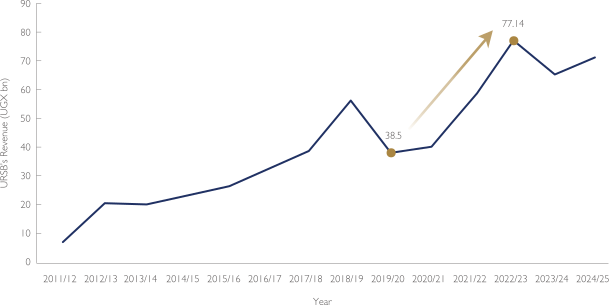
For URSB, today it has no problem getting funding, because of our continuing good performance, increased revenue, and growing public trust as an institution. The Ministry of Finance has not only continued to fund us but also connected us with the World Bank, which gave us US$ 20m to revamp our infrastructure. We have since recovered this cost: we collected over US$ 20m in just one financial year. We have shown we make good value with the money given to us. We have won awards for digitalisation and for customer service, including from the private sector.
We have earned the confidence of our development partners, who are also consumers of our services. Through us, they get reliable information about companies and businesses online. They are now coming forward seeking to cooperate with us to further improve the business environment.
Another impact has been enhanced transparency and reduced corruption. We are no longer regarded in public opinion as among Uganda’s most corrupt institutions. Online payments, and especially mobile money, now account for 80% of our revenue. This means there is no reason to pay someone in the middle when using our services. Uganda’s tax authority used to regard us as aiding tax evasion. Today, we are seen as adding value and there has been better inter-agency collaboration.
One of the key pillars of the Digital Uganda Vision 2040 is Digital Infrastructure and Connectivity,2 which we are advancing by simplifying services and providing them all digitally and online. In doing so, we are also contributing to formalisation and financial inclusion, which have been challenges for Uganda. An entity that is registered enters the formal economy and can then contribute to tax revenue. We are now looking into playing an even bigger role, with our mandate to register all non-individuals or legal entities, as we will be able to share this information electronically. This places us in an important position for digital governance.
Revenue Collected by URSB from Business Registration Services
Source: URSB
How does URSB plan to further incorporate technology in future to improve its services?
We have positioned ourselves as a key leader in Uganda’s public service reform. We are looking at advancing our system integration to make sure our data is easily accessible because every entity, private or government, needs our data.
Because we are a data warehouse, we are looking to put in place a fully-fledged digital signature infrastructure to increase our data security and improve trust in the information we hold. We are also strengthening our cybersecurity and data governance to align our registry with Uganda’s new data protection laws.
We are continuing to explore emerging technologies. For example, we are looking at hiring artificial intelligence (AI) and data specialists, integrating advanced AI-powered chatbots to minimise the number of our services that require human intervention. We are also working on a pilot blockchain between ourselves and commercial banks aimed at ensuring that the information we hold is valuable and is trusted by all stakeholders to facilitate their business operations.
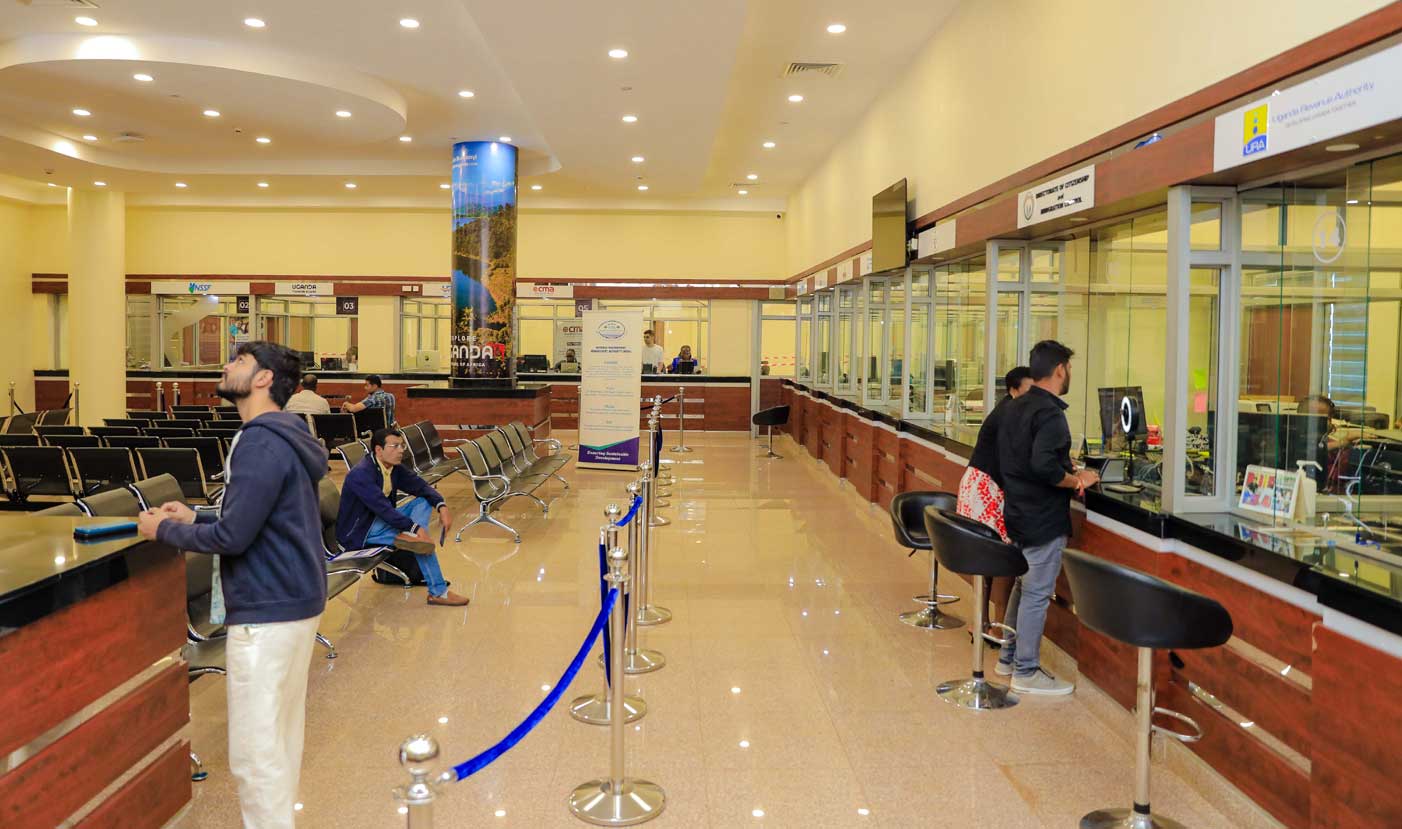
Lastly, we are creating an environment to nurture a more digitally skilled workforce. For instance, we are planning an innovation hub to help our teams continually think about how to do things better or more simply, spurred on by international benchmarks. In the coming years, URSB aims to be one of the most competitive registries globally: the services we provide will be needed not just by Uganda but by other countries to facilitate economic transactions.
Governments often work with the private sector to keep pace with rapid technological change. How has URSB worked with companies to develop its services?
I have mentioned one example of a collaboration with a local commercial bank, Centenary Bank. That partnership with the private sector is self-sustaining because the bank manages and provides the service. It pays for and sets up the help desk with a computer and an employee to provide customer service. In rural areas, this is critical because of poor internet and low digital literacy among the population.
We also work extensively with technology service providers to develop IT systems and infrastructure. To ensure smooth collaboration, we developed with the government a more sustainable way of paying for support of the IT systems. We set aside a small fixed portion of every payment for our services into an account reserved exclusively for support payments to technology service providers. The funds in the account are solely dedicated for system upgrades and maintenance. So now, vendors do not face delays in payments for their services because of red tape.
Another example of a collaboration is integrating mobile payments into our digital platform. We worked with telecommunication providers so that users are now able to pay on our platform using their mobile phones. We are in regular discussion with the private sector to identify areas where we can mutually benefit – in some cases, the private sector is even willing to finance those projects.
Digital transformation calls for a bold rethinking of workflows, as well as a cultural shift and change management.
What would you identify as the key building blocks for large-scale transformation within public institutions?
There needs to be adequate planning: develop a blueprint of what you want to achieve and a roadmap of how to get there.
Committed leadership is crucial. Digital transformation calls for a bold rethinking of workflows, as well as a cultural shift and change management: all these need firm, decisive leadership. In URSB’s case, the top management sets the example, such as by insisting on using email for work when staff were still used to only handwritten letters or memos. There must also be clear institutional policies, such as merit-based recruitment and policies against corruption.
Stakeholder engagement and management is key, to make sure there is support both internally and externally for transformation efforts.
Service improvement goes hand in hand with digitalisation. You must continually ask yourselves what and how you can do better. This spirit of continuous improvement is supported by good performance management. How have you done today compared to yesterday? Do you know where you are going wrong? Monitor key performance indicators and internal controls to make sure things are going the way you want them to.